Why nature’s quiet indifference gives us everything we need

I didn’t just lose my phone that day in Nusa Penida — I lost an appendage. At least, that’s what it felt like. One moment, it was in my pocket (because, like an idiot, I was wearing linen pants with the loosest pockets known to man), and the next, it was gone. And when I finally realized this, sitting in a café, I did what any rational adult would do: I had a full-blown panic attack, hyperventilating like I’d just misplaced a kidney.
I returned to my hostel, deflated and defeated. But the kindness of the Balinese should never be understated. Kiting, the hostel assistant and local guide, immediately offered to help. The rest of the day became a full-scale phone chase across Nusa Penida: there I was, on the back of Kiting’s motorcycle, my iPad clutched in my hands like a divining rod as Apple’s Find My Phone feature pinged away.
After discovering a driver had picked it up, it became a desperate race against time — literally tracking a moving target, weaving through broken roads, bouncing over valleys, racing from one tourist spot to another, even stopping random drivers to ask if they were the guy.
And then, just as the sun set, exhausted, we returned to the hostel — where Wayan, the hostel manager, casually told me that my phone had turned up on a Facebook lost-and-found page.
So after an entire day of island-wide motorbike pursuit, we set out again that night to retrieve my broken phone from the very guy we’d been chasing all along. He took a drag of his cigarette, held it out… and then charged me $20 for the privilege of taking back my shattered, useless appendage.
It was, in hindsight, completely ridiculous. We weren’t tracking down a missing person — just a phone. But somehow, we’d launched an island-wide manhunt for a hunk of glass and metal that, let’s be honest, was already dead by the time we found it. And yet, there I was, treating it like I’d lost a beloved family member, prepared to comb through every jungle path, every roadside stall, every beach on Nusa Penida to bring it home.
Now, don’t get me wrong — I know phones are important. I learned that the hard way when I got locked out of my bank accounts for weeks after losing mine. Turns out, without a phone, accessing your own money becomes a bureaucratic nightmare. Customer service purgatory — security checks, hours on hold — it was a mess.
But that wasn’t what I missed the most. It wasn’t the emails or banking or even Maps. It was the habit — the constant reach, the automatic safety check, the little dopamine hit of… whatever. It was a gut-punch, especially thinking of my glorious photos of Bali, capturing that ‘perfect’ moment to share. Because let’s be honest, half the joy of a beautiful sunset is knowing it’ll look great on Instagram, right?
The Digital Ego Trap: Addicted Without Even Knowing It
Your phone has become a reflex, a habit so ingrained you don’t even notice it. You’re waiting in line? Reach for your phone. Sitting alone at a café? Scroll. Nothing urgent? Doesn’t matter — check anyway. It’s automatic and we often don’t even realize we’re doing it.
I didn’t realize how addicted I was to my phone until it was gone. And that’s the scary part — we don’t think we’re addicted, because everyone is addicted. It’s normal to wake up and check notifications before even getting out of bed. Normal to instinctively reach for our phones even when there’s nothing to check. For some people, it’s even normal to walk while staring at their phone. Somebody, please, tell those people they only have two eyes!
We don’t just use our phones. We live inside them. Constantly plugged in, constantly responding, constantly feeding this invisible cycle of input and validation. We’re so used to a world that reflects something back at us that when we step outside, into the vast indifference of nature, we don’t know what to do with ourselves.
Because this world — the real world — doesn’t validate us. Nature doesn’t send us likes. Trees don’t ping us with notifications. The wind won’t comment ‘🔥🔥🔥’ when it brushes against our skin. And somewhere, deep down, that kinda unsettles us.

The Humbling Reality: When Your Precious Device Becomes Just a Product
When I got back to Bali, my girlfriend lent me her old iPhone XR to use while I sorted everything out. And instantly, I noticed it — it was so much slower than my 15 Pro Max, of course. The screen wasn’t as crisp. The response time lagged. It wasn’t the same.
And yet… it was fine. I had access to my banks again (finally). I could text, check my emails, WhatsApp, pay for things, could even check Instagram. But I wasn’t enjoying it as much. And that’s when I realized something important:
A phone is just a product. A hunk of expensive electronics and glass. I had only bought my brand-new phone a few weeks before losing it, and yet—for a moment—I had felt like I had lost something irreplaceable. But that’s ridiculous, isn’t it? You can buy another phone. You can’t buy another friend. You can’t buy another parent. You can’t simulate your visit to Iceland ten years ago. You can’t replace the things that actually matter.
And all it takes to see that clearly? Losing one. Breaking one. Or maybe just… choosing to put it down for a while.
So consider, what if you kept your phone with you, but just… didn’t touch it? Put it on flight mode. Stick it in your backpack. Keep it in your pocket, but resist the itch to check.
At first, it’ll feel like withdrawal. Your fingers will twitch. Your brain will scream: what if I have an email, a notification? It could be important. What if something happened? — even though, statistically, it’s probably just an email from the hundredth newsletter you don’t remember subscribing to.
But if you can push past that? You’ll notice something strange. A lightness. A quietness. The absence of demand.
And maybe, for the first time in a long time, you’ll remember what it’s like to just… exist.
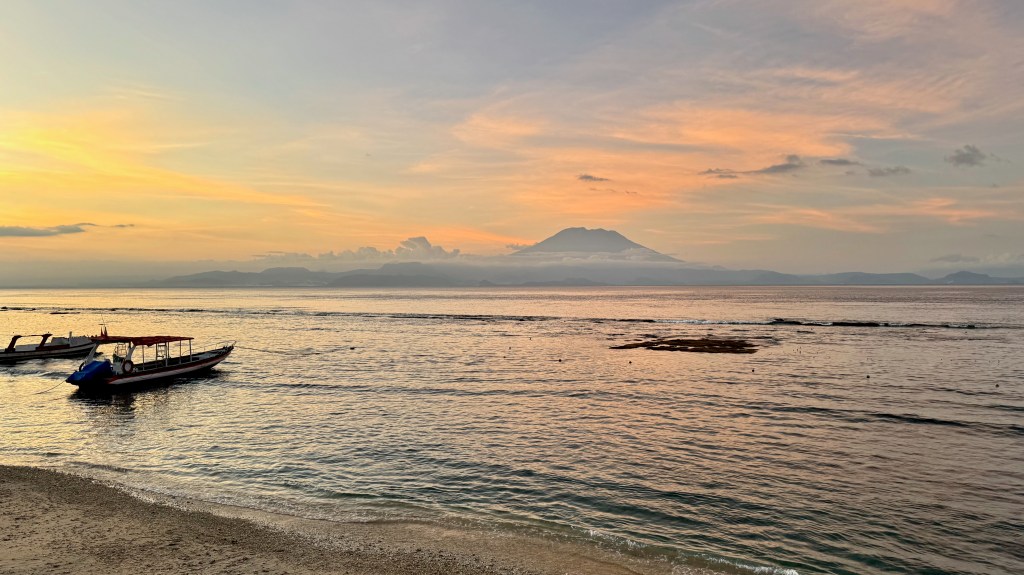
Becoming Present in the Natural World
Something strange happens when you step away from that screen, even for a little while, the world doesn’t stop. The news rolls on. Messages pile up. Humans are still a mess.
But for once, you’re not inside it. You’re just… here.
I remember the days after losing my phone, before I got a new one. I had no choice but to slow down. No Google Maps, no constant messages, no mindless scrolling—or that fear of becoming irrelevant if I didn’t upload a damn Instagram post every time I visited a new place. Just me, a motorbike, and Bali stretching out in every direction. I got lost. A lot.
I sat in rice fields in Ubud watching kids fly their colorful kites. I swam in the crystal waters of Uluwatu. I let the sun warm my face. I breathed in a place without feeling the need to document it. It reminded me of growing up in the 90s, in a time that was a bit quieter, a bit more tactile.
The peace I found couldn’t be captured in a selfie — it could only be felt, moment by moment.
And isn’t that really the point of being alive? When you’re born, there’s no concept of technology, only the experience of birth: the new air burning your lungs, your mother’s tears as she embraces you, the sounds of voices… a sensory overload. That’s nature… a sensory experience, way larger than a 6 inch screen and far more dynamic.
When I think of it this way, my phone ultimately bores me — what now seems like mostly noise, a constant stream of distractions. And the older I get, the more I crave quiet — something real.
Nature doesn’t ask anything from us. It doesn’t need us to engage. It doesn’t demand our attention. It doesn’t validate our existence. It just is. And when you step into that space — when you let yourself exist without the constant pull of your digital distraction — you realize something: You don’t actually need the validation, either.
So no, I’m not telling you to ditch your phone and go off-grid. I’m not anti-digital. I’m just saying… try resisting the reflex. Keep your phone with you, sure, but let it sit in your pocket, or turn it off, put it out of sight. Take a drive to the country, the beach, anywhere and feel the air around you.
Listen to the silence that isn’t really silence. Let the world exist without you for a moment, and maybe you’ll remember… we are all just passing through.
And in that moment? You might realize you’ve never felt lighter.
Because nature asks for nothing. But it gives you everything.
This article was original published in The Startup.
 Jakob Ryce
Leave a comment